Autobarn
Mendip

Project Details
£250,000 to £499,999
Listed Building - Grade II
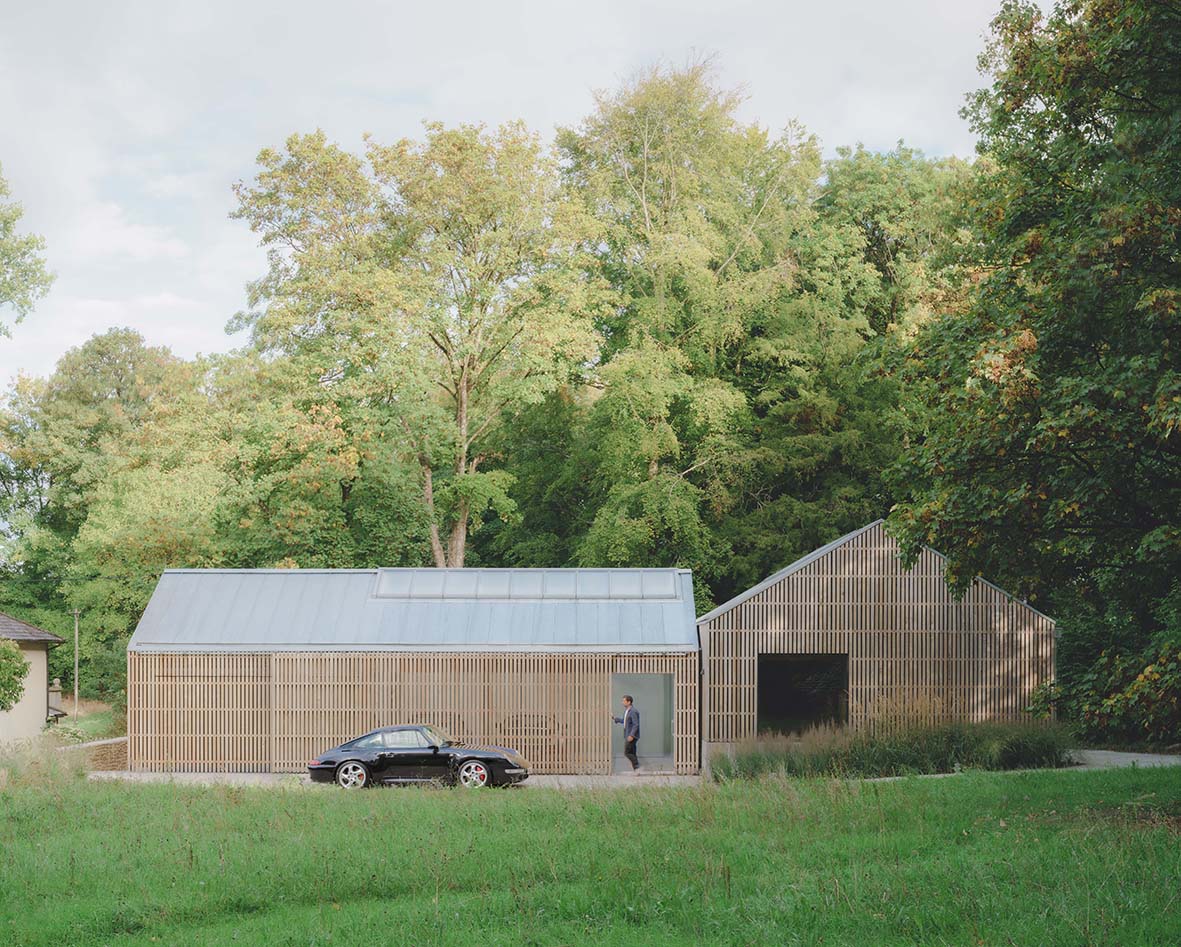
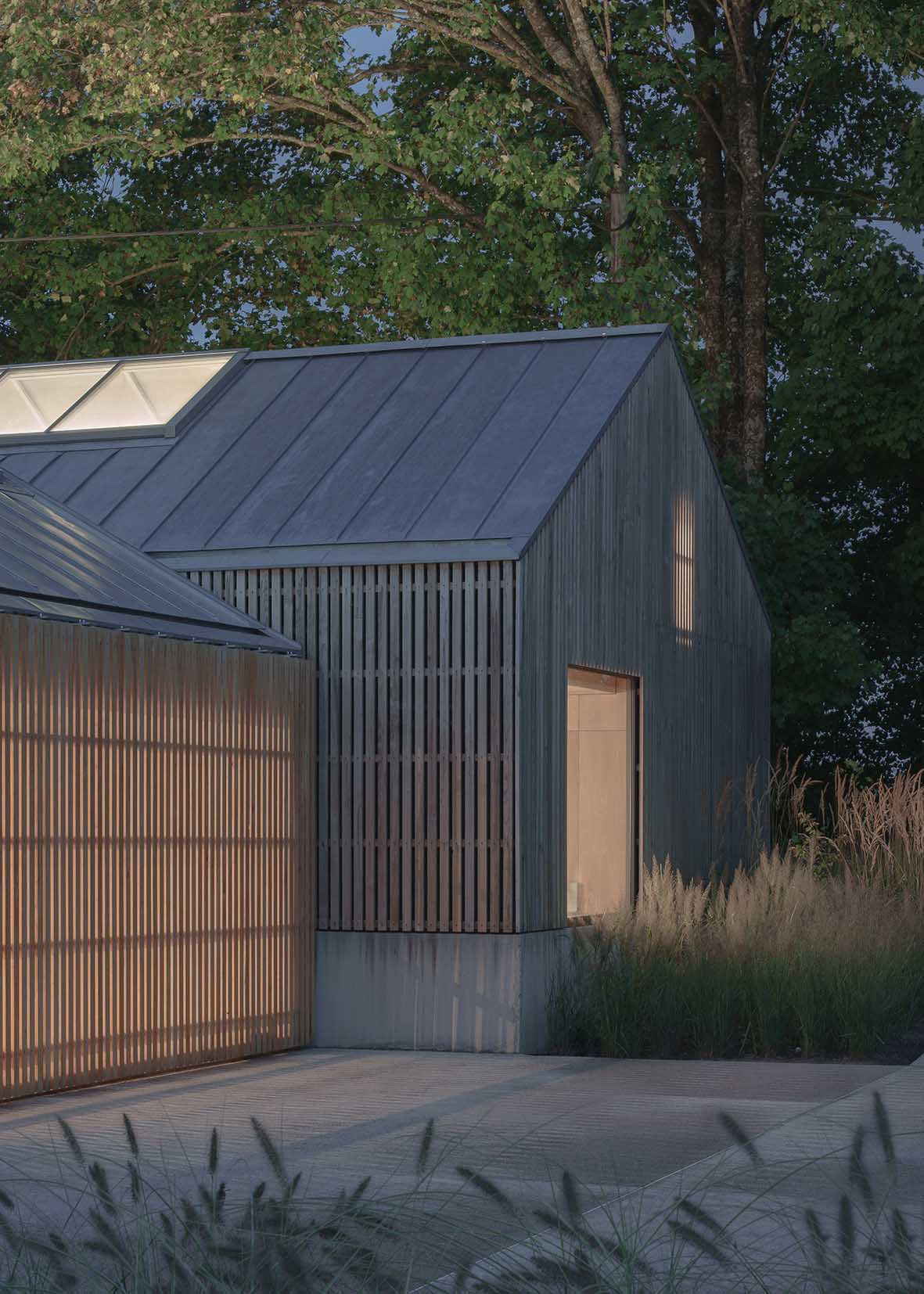
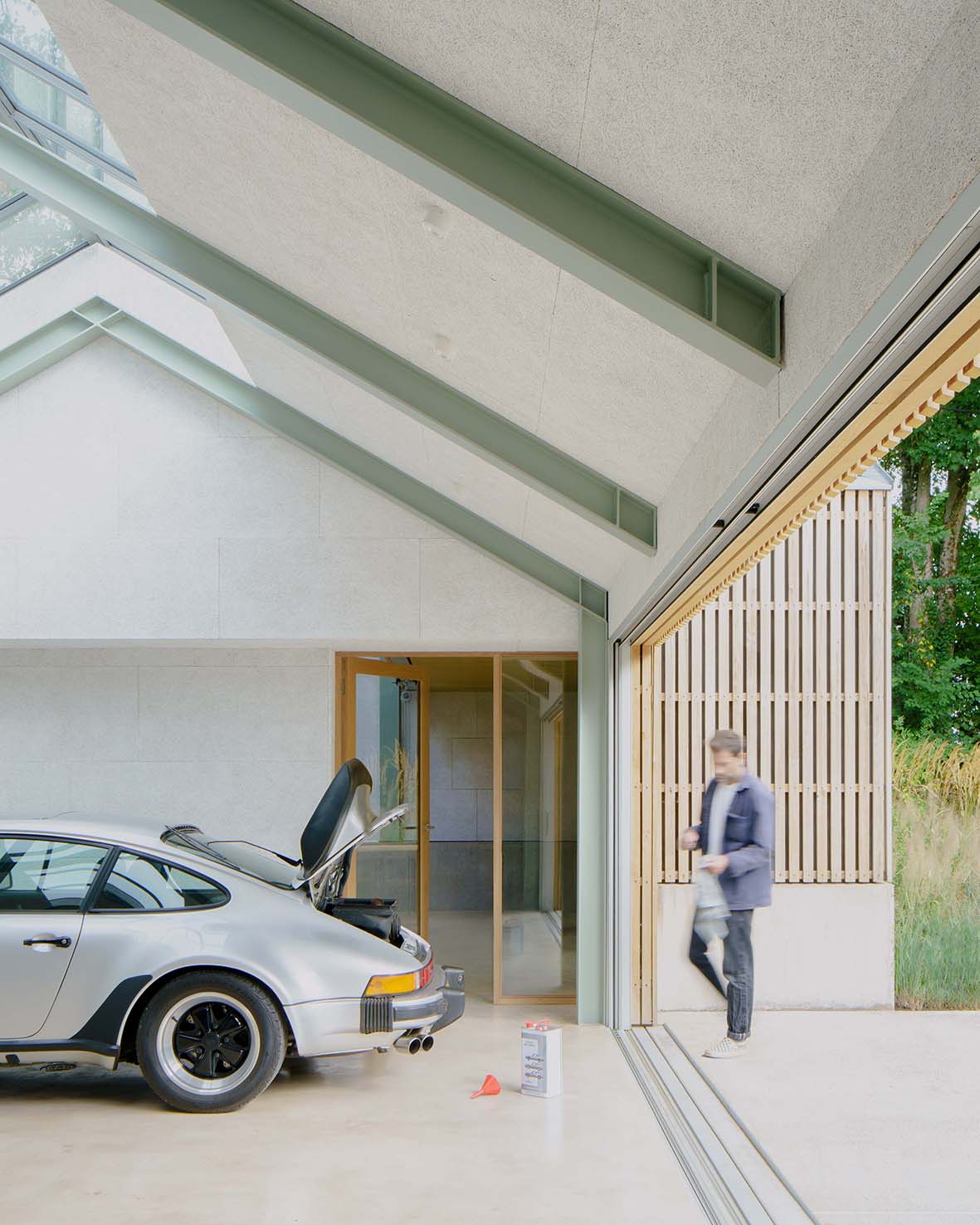
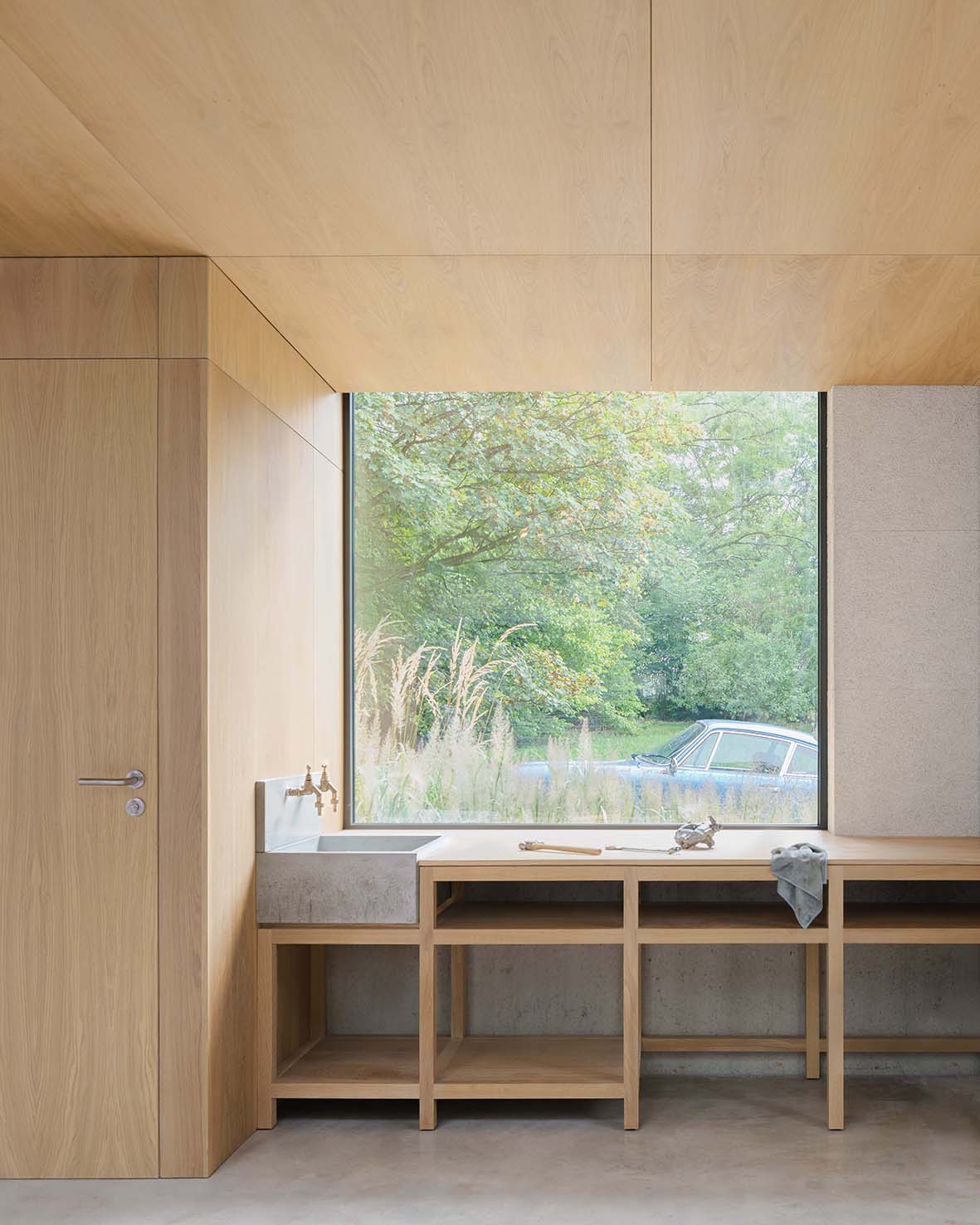
The Autobarn is the realisation of our client’s long-term dream to house his collection of classic German cars. The project is composed of two volumes: a clean, five-bay garage for everyday use and a taller workshop for repairs and future restoration projects. Beyond satisfying this initial use, the project ambition was to create a flexible, ‘long-life, loose-fit’ building that could be used for a range of different uses. Currently it doubles up as event space, however the ambition is that the Autobarn could one day become a low-energy house. Located on the outskirts of a small Somerset village, the project is set within the grounds of an eighteenth-century Grade 2 listed house. It replaces several haphazard outbuildings and consolidates their amenity into an elegant architectural proposal, nestled within a glade of mature trees. The project’s design references the language of neighbouring agricultural barns. As a practice we are interested in reassessing the rural vernacular, both for its contextual appropriateness and its lessons in low-cost, pragmatic design. As such, the Autobarn re-interprets simple forms and methods of construction, adapting more temporary, rudimentary methods into a robust and elegant paradigm for low-cost, rural architecture. Composed of a concrete base and steel framed structure, intermittent timber cladding and zinc metal roof, the Autobarn adapts barn typologies with varying levels of refinement. Consideration was also given to its weathering, with the natural zinc roof dulling to complement the silver patination of the sweet chestnut cladding. The building’s ‘long-life/loose-fit’ ambitions have meant that the insulation and energy performance exceed residential standards. Although thermostats are currently turned down for its current use, the building includes underfloor heating powered by an Air Source Heat Pump, as well as additional first fix services hidden behind the internal wall paneling for future conversion.