Conservation + Repairs to Tower Lodges
North Hertfordshire
Project Details
£50,000 to £99,999
Listed Building - Grade II, Listed Building - Grade I
Practice
2 Mill Walk , Wheathampstead , ST. ALBANS , Hertfordshire , AL4 8DT , United Kingdom
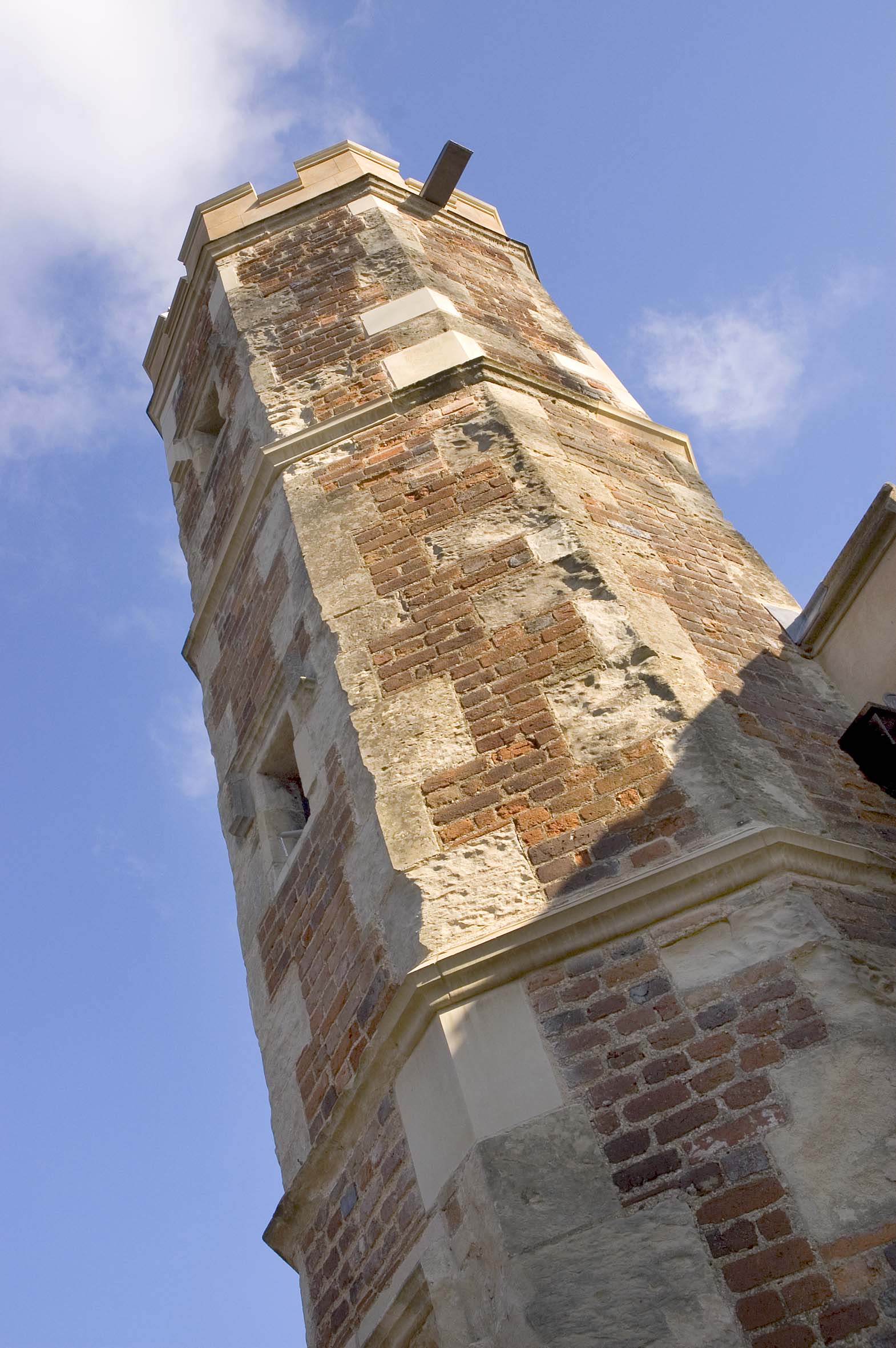
This is a conservation-only project – there are other works being carried out at present but the conservation project was a discrete piece of work. Work of this nature is very tricky – it is hard to make the judgement as to when to stop; or how far to restore lost detail; or use an ‘honest’ repair (which is standard conservation orthodoxy) but which can look really out of place. Due to the unique nature of the building, our solution blurs some boundaries but the decisions were made on a stone- by- stone basis as detailed below. Tower Lodges (Grade 2) is the former rear gatehouse to the Grade 1 listed Knebworth House. It was on the North Herts ‘ Buildings At Risk’ Register prior to the works. Built in 1817 from materials recycled from the extensive demolition of the Tudor house by Lady Lytton. The materials in the centre section and tower are Tudor brickwork and Tudor ‘clunch’ (properly ‘chalkstone’) – with later Bathstone insertions. To make it fashionable, it was given a Gothick facelift. Newly discovered, natural cements – including ‘roman cement’ were used – even as mortar repairs to the clunch. The impermeability of these cements had a deleterious affect on the ‘clunch’, hastening spalling. It was heavily repaired at various times in the 20th C . Lost ‘clunch’ details were faked with cement (further hastening the decline of the adjacent stonework). Derelict by the 1980’s and sold to private owners, it was turned into a single family dwelling – with the centre section filled in and part of one side completely rebuilt. Most of the work was very substandard – internal grade blockwork used in repairing and extending the parapets, polythene bags as DPCs and hard cement render. This work added to the problem as all the parapets had to be rebuilt. Conservation Assessment + Repair A stone-by-stone assessment was made using a hierarchy of danger to the householder, structural instability, loss of weathering capability, future ease of accessibility for ongoing repair and retention of interesting features arising out of natural ageing or human intervention. We did not want a ‘scraped’ building. However as the building had – from inception – details faked in mortar , a decision was made in conjunction with the conservation officers to restore the mouldings of the entrance arch in lime mortar. This meant that we retained as much as possible of the original Tudor clunch for future generations to discover interesting facts such: as tool markings which showed that some stones had been turned back to front when reused. Thus: Top of the tower was rebuilt, (dangerous, bits falling off and parapet unstable). The arch substantially replaced at the base and patched above. Other stones were replaced or patched. Otherwise a mix of consolidation treatment and shelter coats were used. As the original stones had been treated with a darkening slurry, where thought appropriate, the sheltercoat was similarly darkened to be in the spirit of the original building but toned also to blend in with more whitened areas. Pinnacles and parapets rebuilt and rerendered with the detail reinstated in hydraulic lime render – the sand colour specially selected. There was detailed discussion between us and the contractor’s conservator as to the specifications of render mixes, shelter coats and consolidation treatments. There has been no failure of the renders and mixes after the frosts of winter.